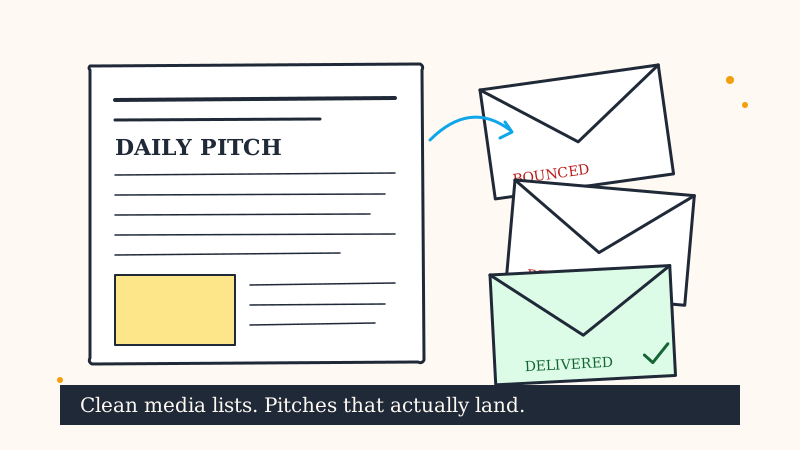
PR teams have a strange data problem. The lists they rely on (Cision, Muck Rack, Prowly, Meltwater, Roxhill, scraped beat lists from a freelancer, the spreadsheet a previous comms hire left in a shared drive) look authoritative when you open them. Beat tags, publication names, recent bylines, phone numbers, neat columns of journalist emails. The lists feel like a finished product.
Then you hit send on the embargoed announcement and the bounce rate is 14 percent. By the end of the day, Gmail Postmaster has flagged your domain reputation as “Bad,” your follow-up to the four reporters who actually replied is sitting in their spam folder, and your VP of Marketing is asking why a publication you have been chasing for two years just unsubscribed from all comms.
Journalist and PR outreach lists decay faster than nearly any other B2B contact source. Reporters change beats every 12 to 18 months. Publications shut down. Freelancers move on. Media database tools refresh on lagging cycles. If you are pitching from a list that has not been validated in the last 30 days, you are almost certainly hurting your sender reputation, your domain authority, and your standing with the reporters who do still read your emails.
This piece walks through why media lists rot so fast, what the damage looks like across the comms stack, and how to wire validation into a PR workflow without turning your team into a data ops department.
Why Media Lists Decay Faster Than B2B Sales Lists
Most B2B sales lists decay at a rate of roughly 2 to 3 percent per month. Media lists move at two to three times that pace, and the decay is structurally different.
Reporters change beats. A tech reporter at a major outlet covering AI in January may be covering climate or housing by June. The person still works at the publication, the email still exists, but pitching them about a new LLM benchmark is now spam from their point of view. The address resolves clean on a basic verification check (the mailbox is active), so a syntax-only tool reports the contact as valid. Your pitch is technically deliverable and contextually wrong.
Freelancers move publications constantly. Freelance contributors are often associated with a single publication in media databases, but they actively write for four or five outlets and contact addresses on the database may be tied to a publication they stopped writing for last year. Their personal Gmail is the real working address, and most databases never capture it.
Staff turnover is brutal. Newsroom layoffs, buyouts, and beat consolidation have been running at historic levels. A list pulled six months ago can have 20 to 30 percent of its addresses associated with people who no longer work at the publication. Some of those mailboxes are forwarded to a replacement (your pitch reads as off-context to a stranger). Most are deprovisioned and hard-bounce.
Publication deaths. Whole publications disappear. Regional outlets, vertical trade pubs, and independent newsletters fold quietly, and any address associated with them goes from working to gone overnight. Media databases lag in pulling these.
Aliases and contact-form forwards. A meaningful chunk of “journalist emails” are actually tip line aliases (tips@, news@, editorial@). These often route to a queue that nobody reads, or to a catch-all that absorbs mail and never replies. They resolve as deliverable but are functionally a graveyard.
Layer those patterns and a fresh export from a top-tier media database is realistically 75 to 85 percent reachable on day one. Six months later, that same list is 55 to 65 percent reachable, and the decay is hitting precisely the contacts that mattered most: senior reporters at the publications you care about, the people most likely to have moved.
The Damage a Dirty Media List Does
PR teams measure outcomes by coverage, not by deliverability, so the cost of a dirty list often hides for months before it surfaces.
Sender reputation craters quickly. PR pitches send in bursts. A product launch, a funding announcement, an embargoed report, all hit the list within a few hours. If even 8 to 10 percent of that burst bounces, mailbox providers (Gmail, Outlook, Yahoo) downgrade the sending domain. The next campaign (a follow-up to interested reporters, a quarterly newsletter to your media network, an event invite) lands in spam or promotions. The team blames the list, but the underlying issue is the domain reputation tax from the previous send.
Real reporters stop seeing your pitches. Once your sender reputation drops, even reporters who do want to hear from you (the ones who clicked on your last announcement, the ones you have personal relationships with) start receiving your emails in spam. They never see the embargo. They never see the exclusive. They write a story without you, and your team thinks the publication “did not care.”
Spam reports compound. Some bounces are silent, but plenty of journalists with a dead address have a successor reading the inbox or a forwarded queue with low patience for unsolicited pitches. Marking your email as spam takes one click. A spam complaint rate above 0.1 percent is a hard limit for major mailbox providers, and PR campaigns regularly cross it on dirty lists.
Embargoed sends leak in the worst direction. When an embargoed pitch hard-bounces, some mail servers reply with a bounce notification that includes the original message body. That bounce can route through forwarding rules, alias resolvers, or auto-responders that put the embargoed content in unexpected places, sometimes including third parties. Clean lists are not just deliverability hygiene, they are a small part of embargo discipline.
Publication relationships get poisoned. Most publications have a small number of editors who set the tone for whether your brand is welcomed or filtered. Sending repeated pitches to a deprovisioned mailbox is one signal that you are not maintaining your list. Once the publication’s IT team builds a rule against your sending domain, you lose access to the whole outlet. Recovering from a publication-wide block is months of work.
Internal credibility erodes. Comms leaders report open rates, reply rates, and coverage to executives. A dirty list silently inflates the denominator on every metric, making the team look less effective than it is. Validation is the cheapest way to fix the math.
What Verification Has to Do for a PR List Specifically
PR lists need verification that does more than basic SMTP checks, because the most damaging entries on a media list are the ones that survive a basic check.
Catch-all detection is critical. Most major publications run on catch-all domains. firstname.lastname@publication.com at a large outlet often resolves as “accept-all” on a standard verification tool because the mail server agrees to receive any address at the domain. The actual mailbox might not exist (the reporter left, the address was never assigned), and your pitch silently disappears. Standard verifiers flag these as “risky” and force the PR team to either send to everything (and bounce) or skip everything (and miss real reporters).
Deeper catch-all resolution looks past the surface SMTP response and determines whether the underlying mailbox actually exists at deliverable resolution. For a media list, this is the difference between hitting 65 percent of your real targets and hitting 90 percent. Scrubby is built around this specific gap and is one of the few tools that resolves catch-all addresses at scale.
Role-based detection. Aliases like tips@, news@, editorial@, press@, info@ may resolve as deliverable but produce near-zero engagement. A good verifier flags these so you can route them to a different campaign (often a general newsroom alert) rather than mixing them with personalized reporter pitches that depend on individual engagement metrics.
Free-mail and personal address detection. Freelancers and senior reporters often work from personal Gmail or Yahoo addresses. Those addresses are valid, but they need a different pitch tone than a @publication.com send. Verification that tags free-mail addresses lets you segment correctly.
Domain-level signals. When a publication folds, its mail server may still answer for a few months before going dark. Verification that looks at domain age, MX record health, and DMARC posture catches these dead publications before your pitch goes out.
Disposable and parked-domain rejection. Less common in true journalist lists but very common in scraped lists from event sign-ups, freelance pitch portals, or “media” lead-gen vendors. Reject these aggressively.
Wiring Validation Into the PR Workflow
The pattern looks different than B2B sales validation because PR teams pitch on short cycles, often hand-curate the final list, and care more about the top of the list than the bottom.
Step 1: Validate every list at import
Pull a list from Cision, Muck Rack, Prowly, an internal spreadsheet, or a freelancer’s hand-off. Before it enters your CRM, your email tool, or your media monitoring stack, run it through a verification API. Tag the verification result on each row.
This catches the volume problem in one pass. A 2,000-row list runs in under an hour and surfaces the 200 to 400 addresses that will hurt you if you send to them.
Step 2: Re-validate before every major send
Embargo announcements, funding news, product launches, big report drops. Anything that sends to a large slice of the list at once is a deliverability event. Re-run validation within 24 to 48 hours of the send, regardless of when the list was last cleaned. This catches the decay since the last validation pass.
Step 3: Quarantine before you delete
Bouncing addresses are not always dead, especially for reporters at small publications or freelance addresses. Move the failing entries into a quarantine list and re-validate the quarantine quarterly. Some come back online (mailbox quota cleared, address reactivated, reporter returned from leave). The rest can be archived without losing the underlying journalist record.
Step 4: Route role-based and catch-all addresses differently
Verified-deliverable individual addresses get the personalized pitch. Tip line aliases get a separate “newsroom” pitch that respects the lower personalization expectation. Unresolved catch-alls get held until you can confirm the underlying mailbox manually, often via LinkedIn or a tool that can resolve identity from the address.
Step 5: Pair validation with calendar-invite outreach for high-priority pitches
For the top of your list (the 30 to 50 reporters who actually move the needle), a verified email plus a smarter touch point can outperform a generic pitch. Some teams use Kali to send calendar invites for briefings with verified senior reporters, which cuts through the inbox noise that even a clean send has to compete with. The point is that validation is the floor, not the ceiling. It guarantees the pitch lands, then the creative outreach gets the response.
Step 6: Monitor the relationship between domain health and validation cadence
Tools like Google Postmaster, Outlook SNDS, and your own bounce-rate dashboards tell you when your sender reputation is moving. Tie those to the cadence of your validation runs. Most teams that pitch weekly find that monthly batch validation, plus pre-send re-validation on big announcements, is the sweet spot. Teams that pitch quarterly often need a fresh run before every send because decay between sends is so steep.
Specific Scenarios Where Validation Pays Back Fast
Embargoed product launches. You have one shot. The list is bigger than usual because launch day pulls in beat reporters from multiple categories. The bounce rate from a stale list can sabotage the entire sender reputation for the announcement window. Validate within 48 hours of the embargo send.
Funding announcements. Often go out under tight time pressure with a list assembled across multiple media databases, an agency contact sheet, and the founders’ personal Rolodex. Different sources have very different freshness, and the combined list often has the worst-of-all decay rates. Always validate the merged list before sending.
Crisis communications. When response speed matters most, deliverability matters most. A stale list at the moment of a crisis is the kind of self-inflicted wound that turns a 24-hour news cycle into a 72-hour one. Keep a separately validated crisis-comms list current at all times.
Trade and vertical publications. Niche trade press has higher staff turnover, smaller IT budgets, and more deprovisioned mailboxes than top-tier general press. Lists assembled for vertical-specific outreach (fintech, biotech, retail tech, climate) decay even faster than general media lists.
International press. Publications outside your primary market have lower visibility in your team’s day-to-day awareness, and changes (publication name shifts, staff moves, mail server migrations) often go unnoticed for months. Treat international segments of the list as separately validated tracks.
Influencer and creator outreach. Many PR teams have folded influencer outreach into the same workflow as journalist pitches. Creator email addresses decay differently (more frequent platform switching, more reliance on management firms with aliased emails), but the underlying validation requirement is the same. Tools focused on creator audiences, like the link-in-bio category that Underfive operates in, sometimes provide the most current contact path for creators who have moved away from their old email setup.
What to Tell Leadership
PR leaders sometimes resist adding validation to the workflow because it sounds like a bottleneck. Frame it the other way: a dirty list is the actual bottleneck.
The pitch to leadership is simple. Validating media lists before each major send raises pitch open rates, raises reply rates, protects sender reputation across the entire comms stack (not just PR sends), prevents accidental publication-wide blocks, and surfaces journalist beat changes that the media database missed. The cost is low (often pennies per address), the runtime is under an hour for most lists, and the downstream value compounds across every send.
The teams that do this consistently see a measurable lift in coverage per pitch, not because their writing got better but because the pitches are landing in inboxes that were previously closed.
Closing Checklist
Before your next PR send, walk through this:
- Has the list been validated within the last 30 days?
- Are catch-all domains resolved into deliverable vs undeliverable rather than just flagged as risky?
- Are role-based aliases tagged and routed to a different campaign?
- Are bouncing addresses quarantined for re-validation rather than deleted outright?
- Is the merged list (Cision + Muck Rack + internal + agency) validated as a unit, not by source?
- Is your sender reputation healthy on Google Postmaster and Outlook SNDS before you launch a big send?
- Are you re-validating within 48 hours of any high-volume embargo or launch send?
- Are international and trade-press segments validated separately and on a tighter cadence?
- Are you measuring open and reply rates against verified-valid addresses, not raw list size, so your real performance is visible?
Clean lists do not write better pitches. They just guarantee that when you do write a better pitch, it actually reaches the people you wrote it for. For PR teams, that is the difference between a launch that breaks through and a launch that disappears into a sender reputation hole nobody knew was open.

Scrubby Team
Admin